What Information Is Stored in a Haryana Family ID?
Missing welfare benefits because your family details are wrong? The PPP Haryana Family ID stores your verified income, Aadhaar, caste, land, and education data in one state database. Knowing every stored field helps you fix errors fast and claim benefits without delays.
Quick Answer : A Haryana Family ID stores socio-economic data within the Family Information Data Repository. It links each resident family member’s head of family relation, Aadhaar, PAN, birth date, verification status, land holdings, marital status, caste category, occupational background, and annual verified family income bracket for direct social welfare distribution.
Key Data Fields Stored in a Haryana Family ID
The Parivar Pehchan Patra (PPP) is Haryana’s official family database. It runs under the Citizen Resource Information Department (CRID). Each household gets an 8-digit Family ID. The Family Information Data Repository (FIDR) holds all records. It updates births, deaths, and marriages from municipal records. This system stops duplicate benefit payments and speeds up verification.
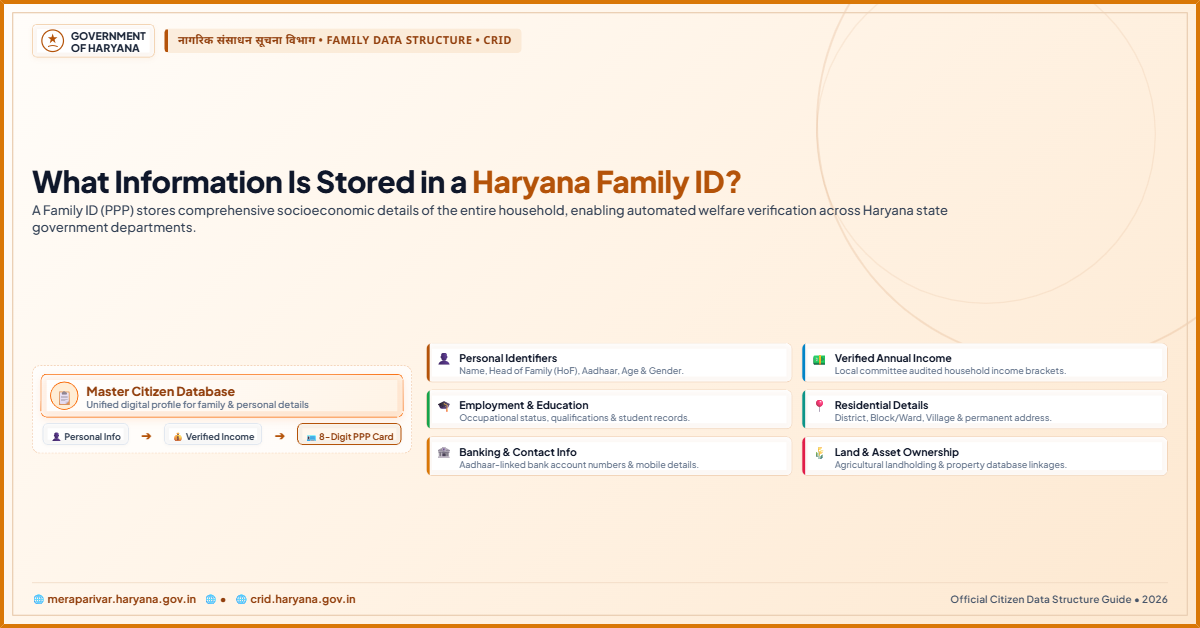
1. Primary Household Identification
- Unique Family ID Number: An 8-digit alphanumeric code for permanent residents. Temporary applicants get a 9-digit code starting with “T”.
- Head of Family Details: Name, gender, age, and relationship to every listed member.
- Residential Address: Full home address, block or ward number, district, and PIN code.
These fields confirm that one family equals one record. They also help the state link every member to the correct household.
2. Individual Member Demographics
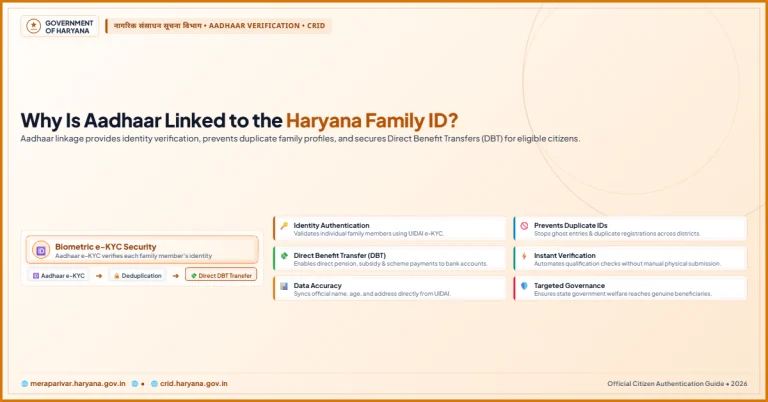
Each person in the family has a separate profile inside the Family ID. The database stores full legal name, date of birth, age, and gender. It also maps a 12-digit Aadhaar number from the UIDAI and PAN details for tax purposes. A verified mobile number is saved for OTP checks. These identity markers stop fake claims and keep records accurate.
3. Economic and Income Data
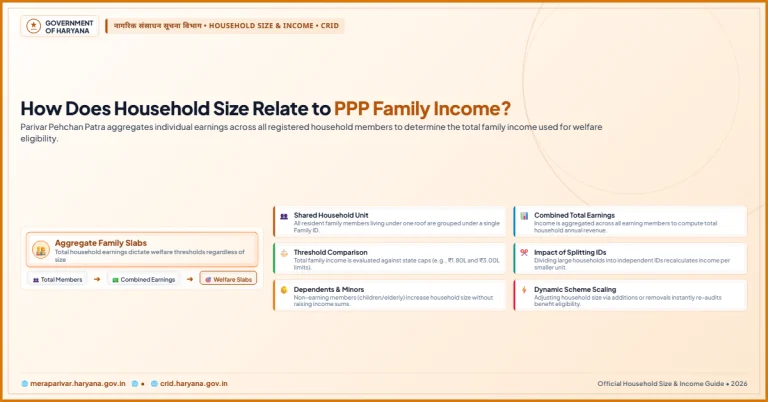
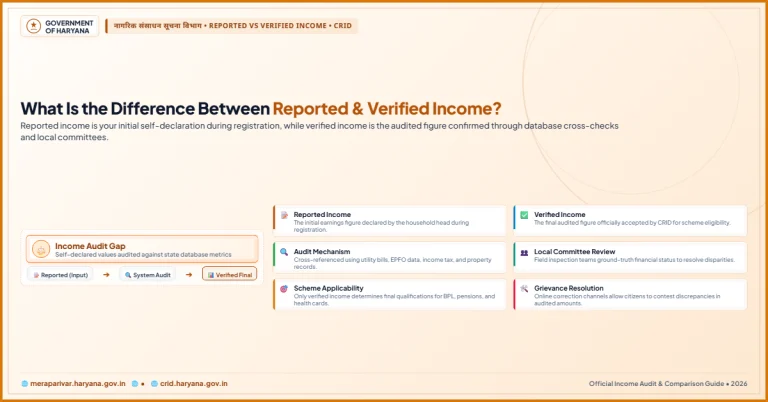
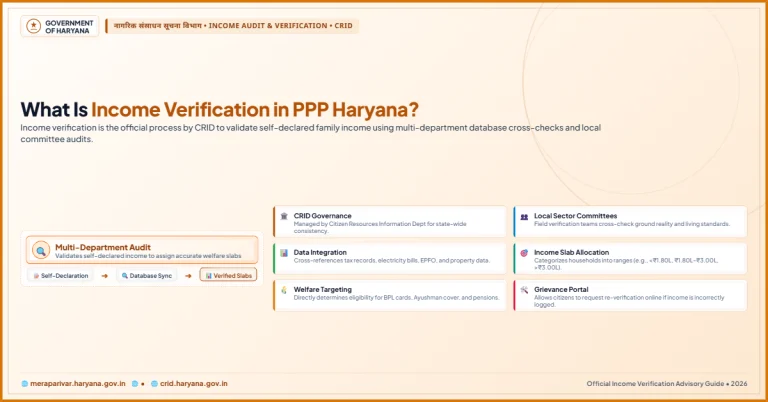
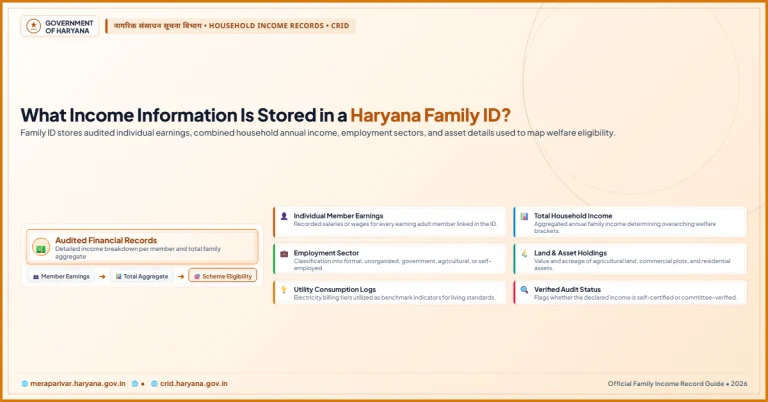
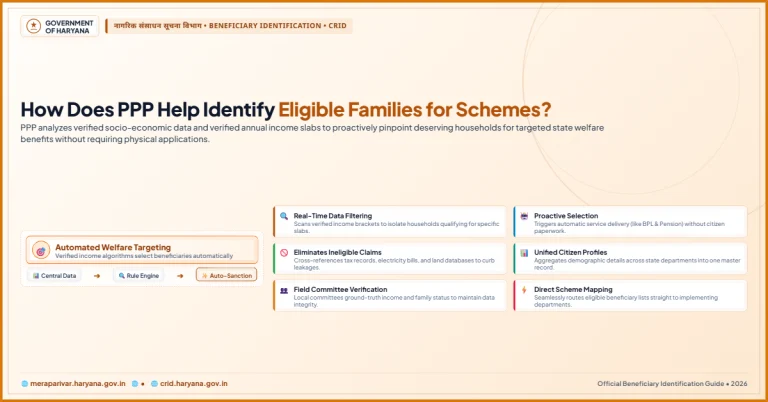
The PPP records two income figures. First is the self-declared yearly income from the head of the family. Second is the verified annual family income. Local sector committees check this figure against tax filings, electricity use, and property records. The database also stores occupational status, such as government service, private job, self-employment, farming, or unemployment. This data decides who qualifies for subsidized rations and welfare schemes.
4. Social and Caste Classifications
Haryana stores caste category as General, Scheduled Caste (SC), Backward Class A (BCA), or Backward Class B (BCB). These labels support reservation alignment and scholarship access. The database also records Divyang (disability) status, including verified disability percentages. This field routes social security pensions to eligible residents without repeated paperwork.
5. Educational and Professional Credentials
The Family ID keeps the highest completed education level. Examples include literate, high school, graduate, or professional diploma. It also logs technical skills or vocational training. These details help match residents with employment schemes and skill programs. Students can get scholarships faster because their family record already shows their background.
6. Property, Land, and Utility Metrics
Land holding records show agricultural land in acres and urban property details. Ownership status is also saved. The database stores electricity consumer account numbers. These numbers help assess living standards and verify lower-income status. This data supports farm subsidies, property checks, and ration card decisions.
Summary Table of Stored Information
| Data Category | Specific Information Recorded | Purpose of Data Storage |
| Identity Credentials | Name, Aadhaar number, age, gender, photo | Prevents fake identity claims and authenticates residents |
| Income Metrics | Verified yearly household income bracket | Determines eligibility for subsidized rations and welfare schemes |
| Socio-Economic Data | Caste category, disability status, land holdings | Automates access to caste certificates, pensions, and scholarships |
| Contact & Banking | Mobile number, optional bank account details | Enables Direct Benefit Transfer (DBT) and sends system updates |
How to Verify Information Stored in Your Family ID
You can check your stored data on the official PPP Haryana portal. The process takes a few minutes if your mobile number is linked correctly.
Steps to Check Your Stored Data
- Open the Official Portal: Launch the CRID Parivar Pehchan Patra website in your browser.
- Go to Citizen Corner: Click the “Citizen Corner” link on the top menu.
- Pick the Update Option: Choose “Update Family Details” from the drop-down list.
- Enter Your Family ID: Type your 8-digit PPP number. If you only have Aadhaar, select “No” and use that instead.
- Complete OTP Verification: Enter the 4-digit OTP sent to the mobile number linked with the head of the family.
- Review Member Profiles: Open the family dashboard. Check income brackets, address fields, personal details, and verification badges.
Why Is Accurate Family ID Data Essential?
Accurate data in the Family Information Data Repository protects your access to public services. Wrong or unverified fields can delay welfare payments. They can also block scheme approvals.
Key benefits of correct stored data include:
- Automatic Welfare Delivery: You get selected for BPL Ration Cards, Chirayu Haryana Health Insurance, and Old Age Samman Allowance without fresh paperwork.
- Paperless Services: You do not need to carry physical income or caste certificates to government offices.
- Direct Financial Grants: Student scholarships and farm subsidies reach your verified bank account through DBT.
Common Issues That Affect Stored Data
Some families face problems with outdated or mismatched details. A missing Aadhaar link can stop OTP verification. A wrong income bracket can remove you from a scheme. A spelling error in your name can delay pension approval. The PPP system updates some fields automatically, but manual corrections may need a visit to a Common Service Centre (CSC). Regular checks help you catch errors early.
How PPP Haryana Family ID Helps Different Groups
- Farmers: Land records and income data support agricultural subsidies.
- Students: Education and caste details speed up scholarship approval.
- Seniors: Age and disability fields route pensions correctly.
- Low-Income Families: Verified income brackets unlock ration cards and health cover.
- Job Seekers: Skill and education records match them with employment schemes.
Conclusion
The Haryana Family ID system stores a complete digital profile of resident households. It combines identity markers, income status, land details, and education records in one place. Keeping this stored information accurate and up to date ensures smooth access to Haryana government benefits, social security pensions, and administrative help without delays.
Frequently Asked Questions
What is the primary purpose of storing data in a Family ID?
It creates a unified digital repository so eligible residents get state welfare schemes automatically without submitting repeated physical documents.
Is bank account information mandatory in the PPP portal?
No, bank details are optional during registration. But they are recommended for residents who receive Direct Benefit Transfer payments.
Who verifies the income details stored in a Family ID?
Local sector committees and government verification teams check self-declared income against tax records and utility usage.
Can I correct incorrect personal details stored in my Family ID?
Yes. You can request updates on the PPP portal or visit a local Common Service Centre.
What happens if my marital status or family size changes?
The system updates vital records through linked civil databases. You can also request additions or splits on the portal.
Can non-residents of Haryana obtain a Family ID?
Non-residents working or applying for state services in Haryana receive a temporary 9-digit Family ID starting with the letter “T”.